Debt has become one of the biggest financial struggles for Americans. Credit cards, student loans, and personal loans can easily spiral out of control when combined with today’s high interest rates.
- According to NerdWallet’s 2025 Credit Card Report, the average APR is now above 20%, meaning every $1,000 balance costs $200 a year in interest if left unpaid.
- The Federal Reserve reports that total U.S. household debt hit an all-time high in 2025, crossing $17 trillion across mortgages, auto loans, credit cards, and student debt.
- Surveys show that over 35% of Americans carry credit card debt month-to-month, and many feel they’ll “never get out.”
👉 The good news? With the right system, you can break free. Paying off debt is less about income and more about strategy. In this guide, we’ll cover 7 proven methods to help you pay off debt fast, avoid costly mistakes, and finally start building wealth.
Why Debt Is So Costly
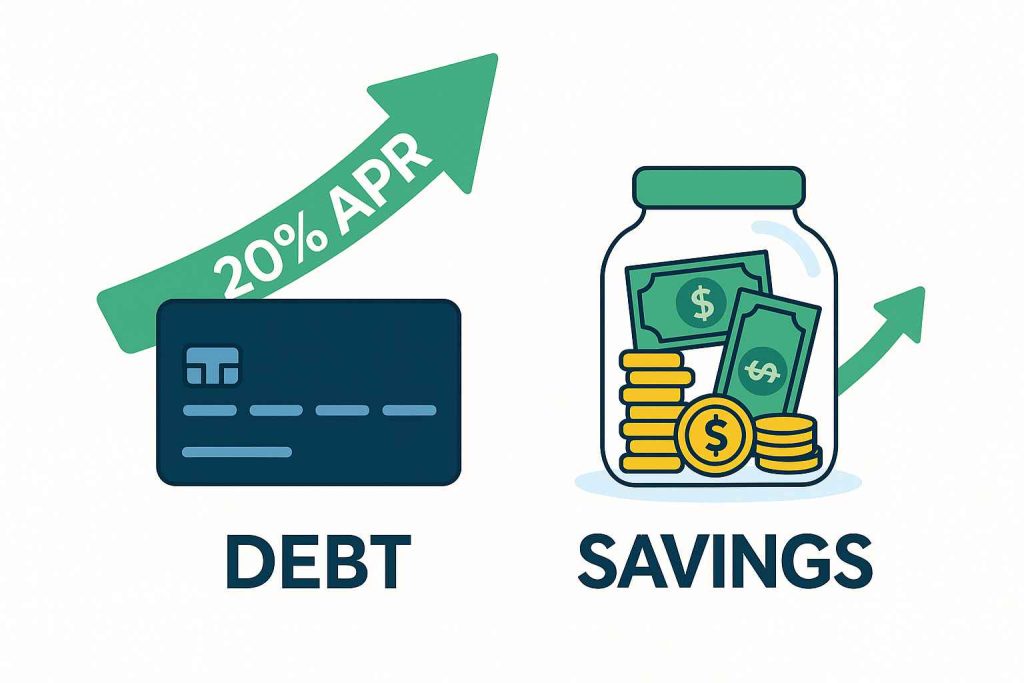
Before we dive into how to pay off debt fast, it’s important to understand why debt is such a drain on your wealth. The problem isn’t just the money you owe — it’s the interest that keeps piling on.
1. The Power of Compounding (Working Against You)
Compounding can grow investments, but it can also grow debt.
- Example: A $5,000 balance at 20% APR costs $1,000 in interest per year if you only make minimum payments.
- Over 5 years, you’d pay more than $5,000 in interest alone — basically doubling the debt.
2. Credit Card Debt in 2025
- NerdWallet’s 2025 Credit Card Report shows the average APR is 20.7%, the highest in decades.
- Carrying balances means you’re effectively losing 20% of your money each year. Compare that to investing in an S&P 500 index fund (~7% average annual returns long term), and you can see why paying off debt is the best “investment” you can make.
3. Emotional and Lifestyle Costs
Debt isn’t just financial — it’s mental.
- Constant stress about bills.
- Limited freedom (can’t save for vacations, homes, or retirement).
- Lower credit scores, which means higher costs for car loans, mortgages, or even insurance.
Takeaway: Carrying high-interest debt is like trying to run a marathon with a backpack full of bricks. The faster you get rid of it, the faster you can build wealth.
Step 1: Pay Off Debt Fast by Listing Debts
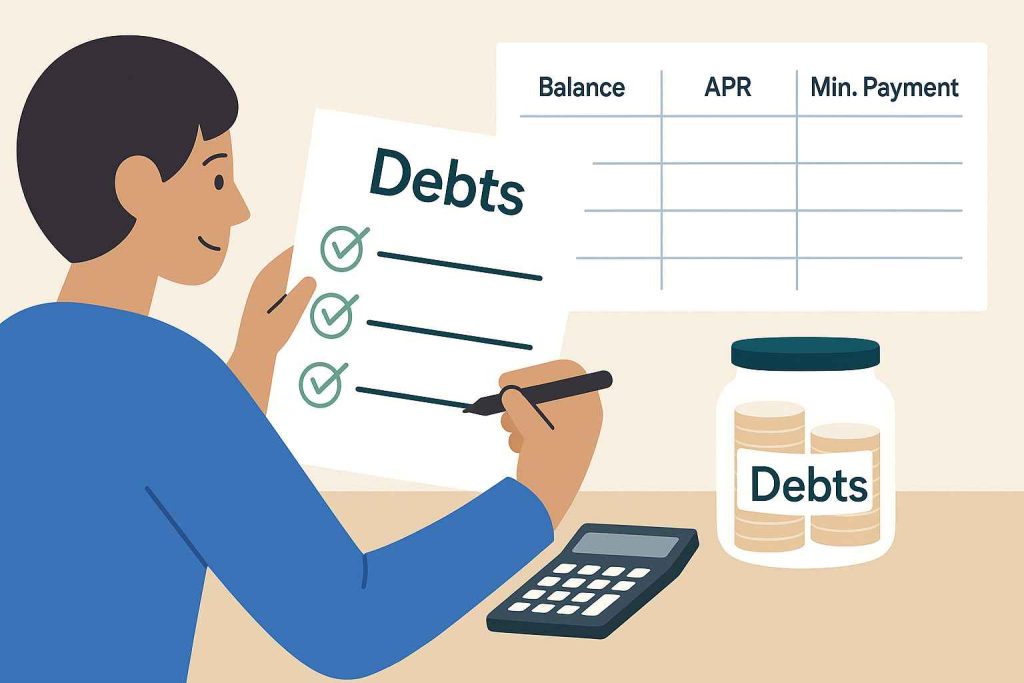
The first step in how to pay off debt fast is getting a clear picture of what you owe. Most people feel overwhelmed because they don’t know the full numbers. Once you organize everything, you can create a strategy.
1. Make a Debt Inventory
Write down every debt you have, including:
- Creditor (Bank, Loan Company, Credit Card)
- Balance
- Interest Rate (APR)
- Minimum Payment
👉 Example:
| Debt Type | Balance | APR | Minimum Payment |
|---|---|---|---|
| Credit Card #1 | $5,000 | 22% | $150 |
| Credit Card #2 | $2,500 | 18% | $75 |
| Student Loan | $15,000 | 6% | $200 |
| Auto Loan | $10,000 | 5% | $250 |
2. Total It Up
- Add your total debt balance.
- Add your total minimum payments.
This shows you exactly how much cash flow is tied up in debt each month.
3. Rank by Interest Rate or Balance
This step sets up your strategy:
- Debt Avalanche Method: Focus on highest APR first (saves most money long-term).
- Debt Snowball Method: Focus on smallest balance first (builds momentum and motivation).
We’ll cover both in detail in the next step.
Step 2: Choose a Payoff Method (Snowball vs Avalanche)
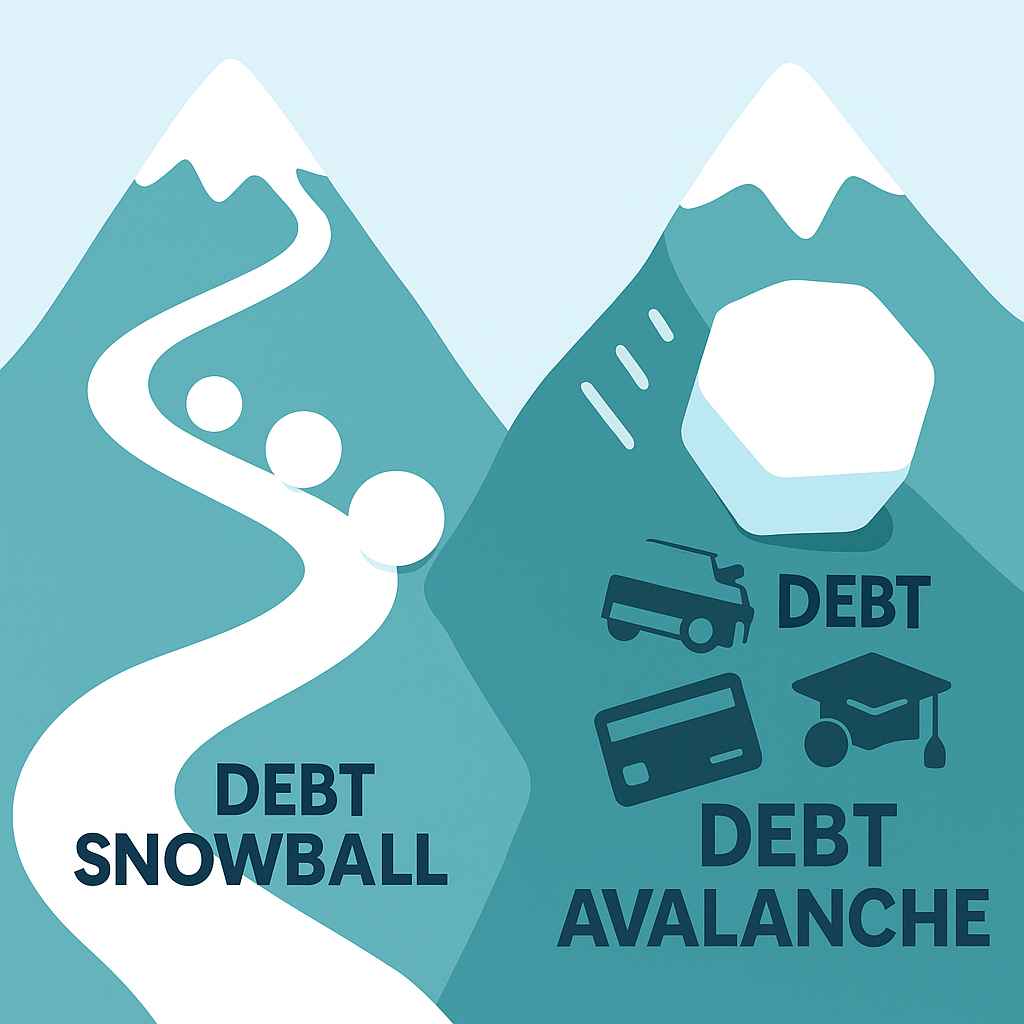
Once you’ve listed all your debts, the next step in how to pay off debt fast is deciding which repayment strategy works best for you. Two proven methods are the Debt Snowball and the Debt Avalanche.
Debt Snowball Method
- How it works: Pay off the smallest balance first, regardless of interest rate.
- Why it works: Builds motivation. Each quick win feels like progress, which keeps you going.
- Example: If you owe $500, $2,500, and $5,000 → focus on the $500 first, then roll that payment into the $2,500, and so on.
Debt Avalanche Method
- How it works: Pay off the highest interest rate first, regardless of balance.
- Why it works: Saves the most money over time by reducing interest costs.
- Example: If one credit card is 22% APR and another is 10% APR, focus on the 22% card first, even if the balance is larger.
Snowball vs Avalanche: Which Is Better?
| Factor | Debt Snowball | Debt Avalanche |
|---|---|---|
| Focus | Smallest balance | Highest interest |
| Motivation | High (quick wins) | Moderate |
| Money Saved | Less interest saved | Most interest saved |
| Best For | People who need emotional momentum | People who want maximum savings |
✅ Pro Tip: Choose the method that matches your personality. If you need motivation, pick Snowball. If you’re disciplined with numbers, pick Avalanche. Either way, you’ll pay off debt faster than doing nothing.
Step 3: Consider Balance Transfers or Debt Consolidation
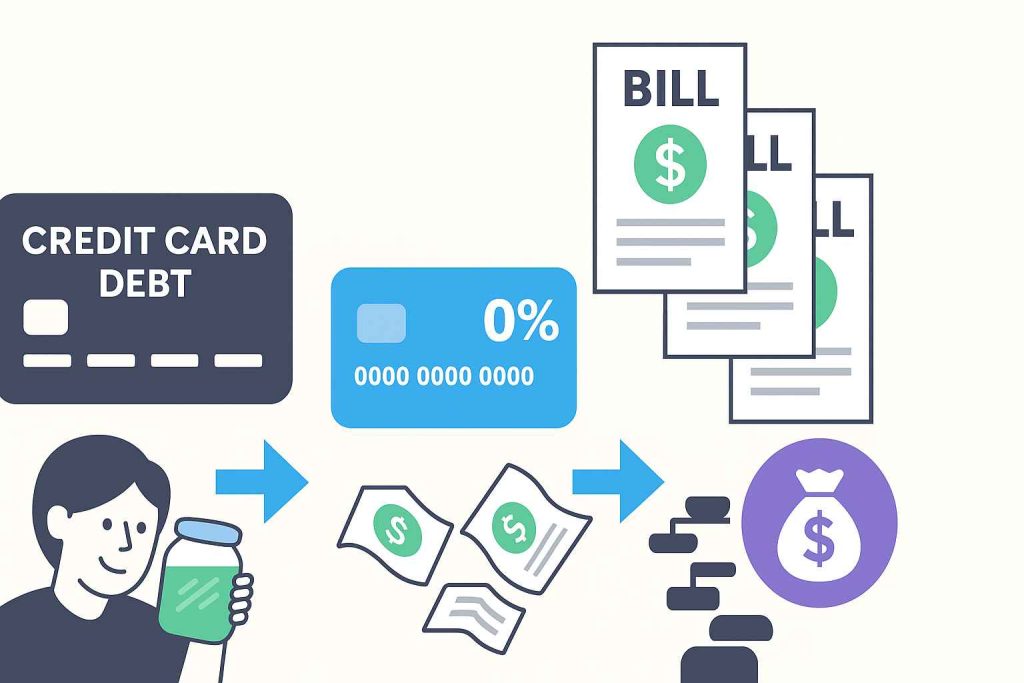
Another proven approach in to pay off debt fast is to lower your interest rate, so more of your money goes toward the balance instead of fees. Two common tools are balance transfer credit cards and debt consolidation loans.
1. Balance Transfer Credit Cards
- How it works: Move your high-interest credit card debt onto a new card that offers 0% APR for 12–18 months (intro period).
- Why it helps: Lets you pay down the balance interest-free, saving hundreds or even thousands.
- Example: If you transfer $5,000 from a 22% APR card to a 0% APR card and pay $300/month, you’ll save over $1,000 in interest during the promo period.
- Risks:
- Must pay off before promo expires (rates jump back to ~20%).
- May include transfer fees (3–5%).
2. Debt Consolidation Loans
- How it works: Take out one lower-interest personal loan and use it to pay off multiple high-interest debts.
- Why it helps: Simplifies payments (one monthly bill) and usually offers lower rates than credit cards.
- Example: Consolidating $15,000 in debt from 22% APR cards into a 10% personal loan could save $150+ per month in interest.
- Risks:
- Requires good-to-fair credit for best rates.
- If you don’t stop borrowing, you could end up with more debt.
3. When to Use These Options
- Best for disciplined payers who can commit to paying off debt aggressively.
- Not recommended if you tend to rack up new balances — otherwise, you’ll dig deeper into debt.
✅ Takeaway: If you qualify, a balance transfer or consolidation loan can cut years off your debt payoff plan. Just remember: these are tools, not magic fixes. Discipline still matters.
Step 4: Cut Expenses and Redirect Savings
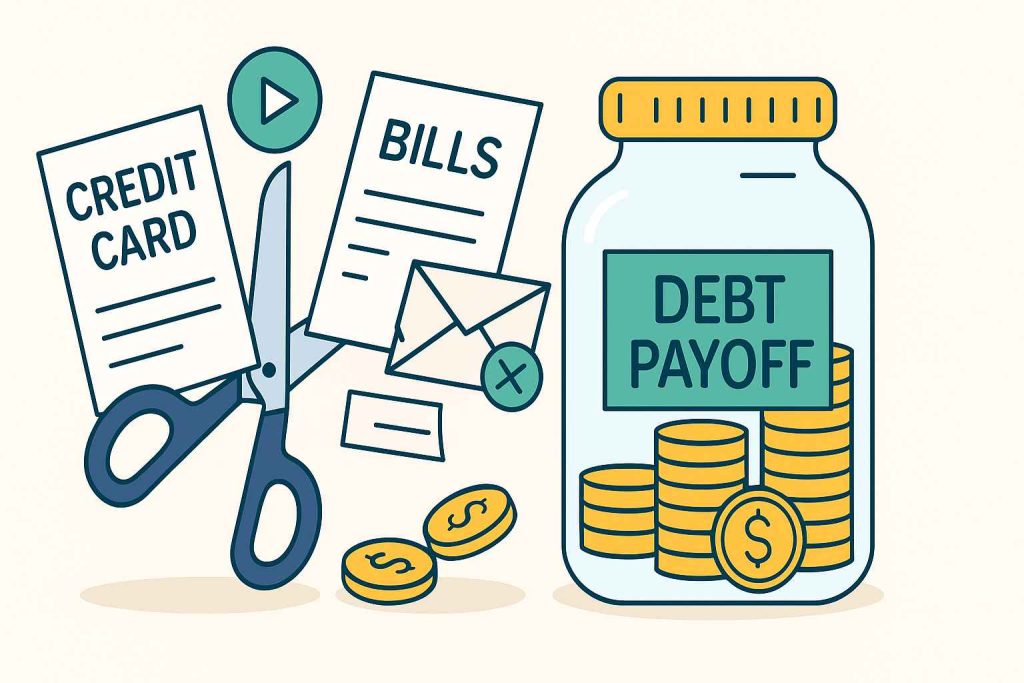
One of the fastest ways to accelerate how to pay off debt fast is by freeing up money in your budget. Every extra dollar you save can go straight toward debt, shrinking balances quicker and saving you interest.
1. Review Your Subscriptions
- Cancel unused streaming, gym, or app subscriptions.
- Even saving $50/month adds $600/year toward debt payoff.
2. Cook More, Eat Out Less
- If you cut just 2 restaurant meals a week, you could save $150–$200/month.
- Redirect that money to your highest-interest debt.
3. Lower Bills
- Negotiate or switch providers for internet, phone, or insurance.
- Tools like Trim or BillShark help cut recurring bills.
4. Embrace the 24-Hour Rule
- Before making non-essential purchases, wait 24 hours.
- This simple pause helps curb impulse spending.
5. Use Our Saving Guide for More Tips
👉 For more detailed ideas, check our blog: 25 Practical Ways to Save Money Every Month (2025 Edition).
✅ Pro Tip: Automate these savings. If you free up $200/month, set an automatic payment to your debt immediately — don’t let the money sit in your account.
Step 5: Boost Income to Pay Off Debt Fast
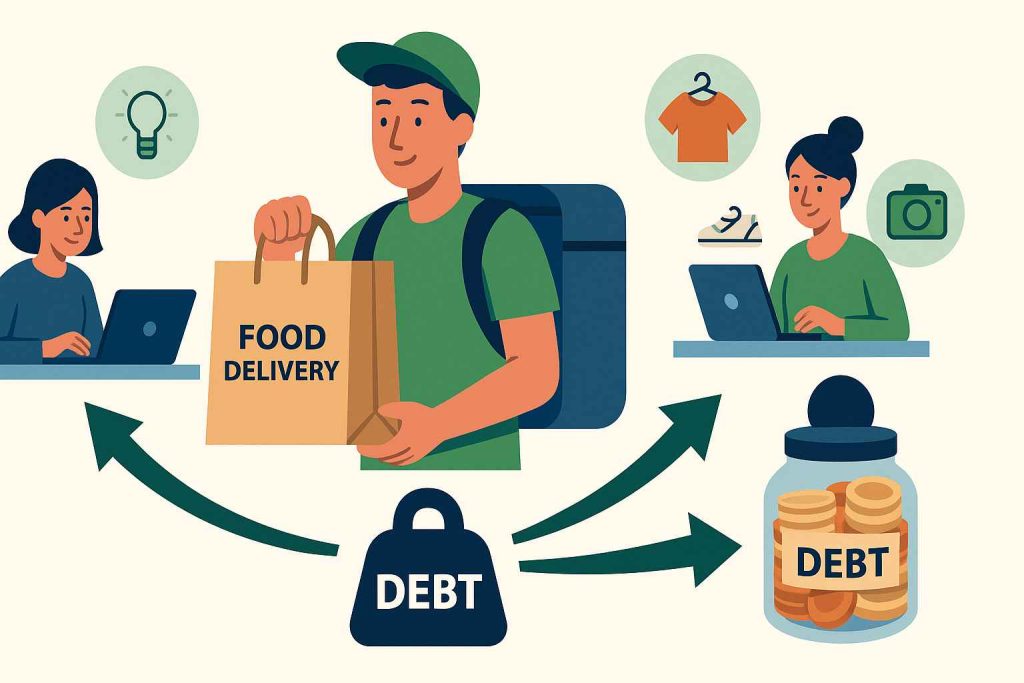
Cutting expenses helps, but sometimes the fastest way in how to pay off debt fast is simply earning more. Even an extra $200–$500 a month can dramatically speed up your debt payoff timeline.
1. Start a Side Hustle
- Freelancing: Offer services like writing, design, tutoring, or coding on platforms like Upwork or Fiverr.
- Gig Work: Drive for Uber, deliver for DoorDash, or shop with Instacart.
- Remote Tasks: Virtual assistant or data entry jobs.
👉 Even $15/hour, working 10 hours a week, is an extra $600/month toward debt.
2. Sell Unused Items
- Go through closets, garage, and storage.
- List items on eBay, Facebook Marketplace, or Poshmark.
- One weekend decluttering could free up $200–$1,000 in cash.
3. Monetize Skills or Hobbies
- Photography, crafts, or tutoring can turn into part-time income streams.
- Example: Teaching guitar lessons for $30/hour just 4 hours a week = $480/month.
4. Ask for More at Work
- Negotiate a raise or pick up overtime if available.
- Even a $1/hour raise adds $2,000/year for a full-time worker.
✅ Takeaway: Every extra dollar should go straight to your highest-interest debt. Combining expense cuts (Step 4) with extra income (Step 5) can double the speed of your payoff.
Step 6: Automate Payments & Avoid New Debt
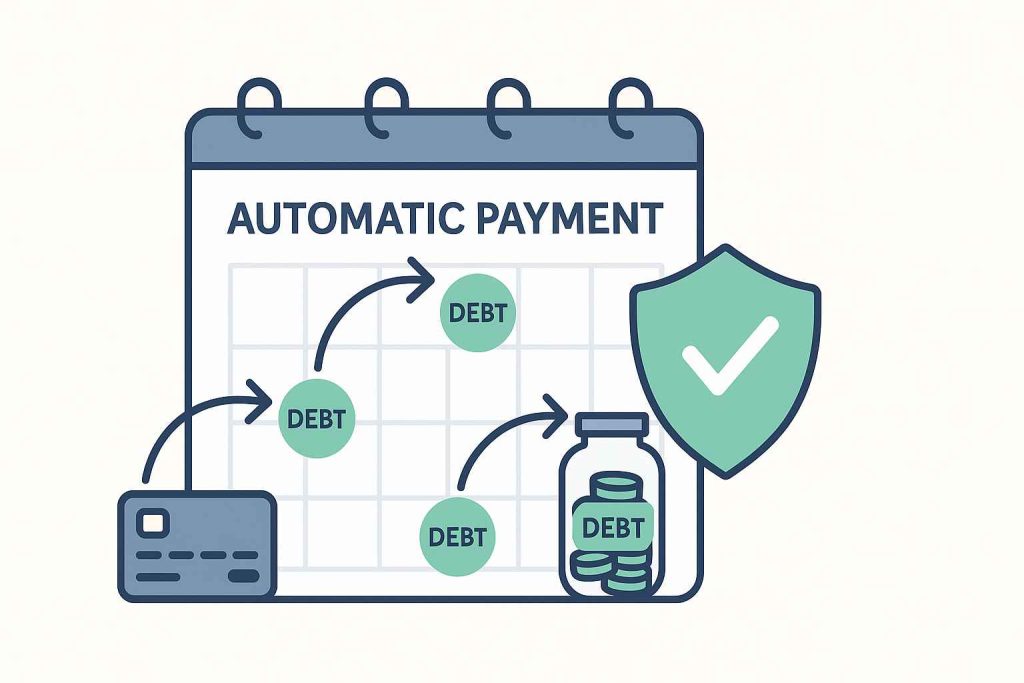
When learning how to pay off debt fast, consistency is everything. The two biggest roadblocks for most people are forgetting payments and adding new debt. Automation and discipline fix both.
1. Automate Your Minimum Payments
- Set up autopay for every debt to avoid late fees and credit score damage.
- Even one missed payment can drop your score by 100+ points.
2. Automate Extra Payments Toward Target Debt
- If you’re using the Debt Snowball or Debt Avalanche, set a recurring transfer for your extra payment on payday.
- Example: $200 automatically applied to your highest-interest credit card every 2 weeks.
3. Avoid New Debt
- Put credit cards away or freeze them in an app if you struggle with overspending.
- Build your emergency fund (see How to Build an Emergency Fund in 2025) so you don’t have to rely on debt when life happens.
- Remember: Paying off debt while adding more is like trying to bail water from a sinking boat while drilling new holes.
✅ Pro Tip: Treat debt payoff like a monthly subscription to your future self. Once it’s automated, you won’t have to rely on willpower — progress just happens.
Step 7: Track Progress & Celebrate Wins
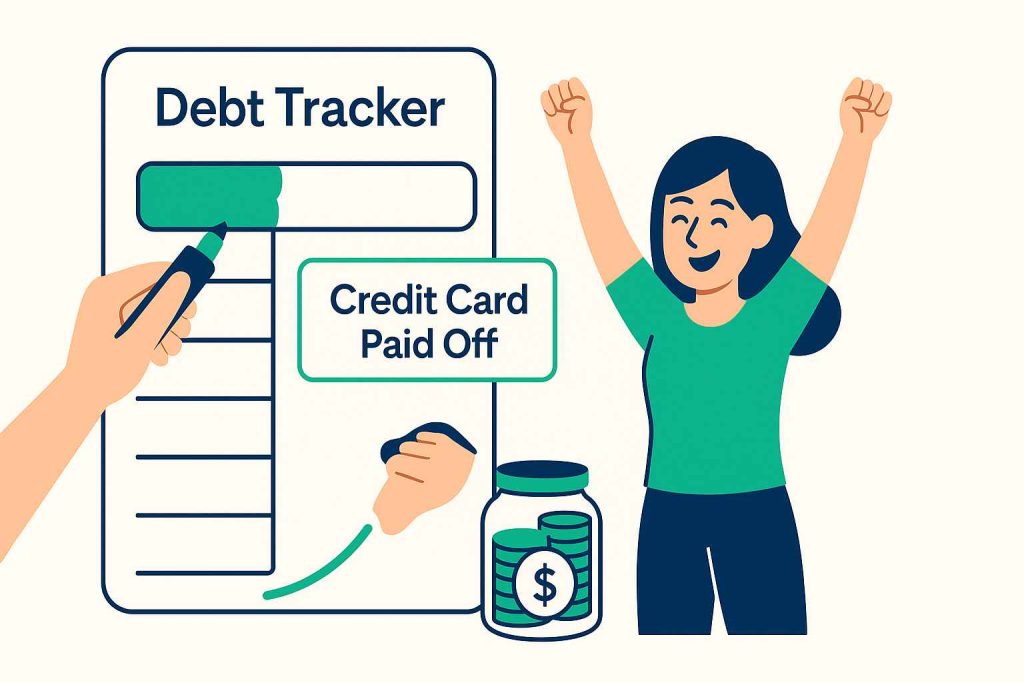
Sticking with a debt payoff plan can feel long and tiring, but tracking progress keeps you motivated.
- Visual Progress: Use a debt tracker chart, coloring sheet, or app like Undebt.it.
- Celebrate Milestones: Every time you pay off a debt or hit a balance milestone ($1k, $5k), reward yourself in a small, budget-friendly way.
- Refocus Regularly: Revisit your list every month to update balances, check progress, and adjust strategy if needed.
👉 Think of it like a fitness journey — progress is slow at first, but the wins compound over time.
Case Studies: Paying Off Debt in Real Life
1. Single Professional With Credit Card Debt
- Balance: $8,000 on 2 credit cards (APR 22%).
- Strategy: Debt Avalanche (highest APR first) + $300 extra per month.
- Result: Paid off in 30 months instead of 5 years, saving $4,200 in interest.
2. Family of Four With Multiple Loans
- Balances: $3,500 credit card, $12,000 car loan, $20,000 student loan.
- Strategy: Debt Snowball (start with $3,500 credit card → car loan → student loan).
- Result: First win in 6 months gave momentum. Debt-free in 4.5 years.
3. Freelancer With Irregular Income
- Balances: $15,000 credit card debt.
- Strategy: Debt consolidation loan at 9% APR, automated payments of $600/month.
- Result: Saved $200/month in interest, paid off in 32 months.
FAQs: How to Pay Off Debt Fast
1. What’s the fastest way to pay off debt?
The fastest method is the Debt Avalanche — targeting the highest-interest debt first while paying minimums on others.
2. Is the Debt Snowball better than Avalanche?
Snowball provides quick wins and motivation. Avalanche saves the most money. The “best” depends on your personality.
3. Should I use a balance transfer card?
Yes, if you can pay off the balance during the 0% APR promo (12–18 months). Otherwise, interest will spike again.
4. Can I pay off debt while still saving?
Yes — build a small emergency fund ($500–$1,000) first to avoid falling back into debt. Then focus on payoff.
5. Should I close credit cards after paying them off?
Not always. Closing can lower your credit score by reducing available credit. Instead, keep the account open but inactive.
6. What if I can’t increase income right now?
Focus on expenses. Even an extra $50–$100/month toward debt makes a big difference.
7. What’s the fastest way to pay off debt?
The Avalanche method is widely seen as the most effective strategy in pay off debt fast.
Take Control of Your Debt in 2025
Paying off debt doesn’t happen overnight — but with a proven system, it’s absolutely possible.
Here’s your 7-step action plan:
- List and organize debts → Know exactly what you owe.
- Choose your method → Snowball for motivation, Avalanche for savings.
- Consider balance transfers or consolidation → Lower interest if possible.
- Cut expenses and redirect savings → Free up cash flow.
- Increase income → Side hustles, selling items, freelancing.
- Automate payments and avoid new debt → Stay disciplined.
- Track progress and celebrate wins → Keep momentum alive.
By following these 7 steps, you’ll know exactly pay off debt fast in 2025 and start building real wealth.
👉 Ready to start?
- Learn How to Create a Budget That Actually Works in 2025.
- Check 25 Practical Ways to Save Money Every Month.
- Build your Emergency Fund.
Once debt is gone, you’ll free up cash to invest, save, and finally build lasting wealth. The best time to start was yesterday — the second-best time is today.