
Personal Finance

7 ways How to Improve your Credit Score in 2025 (Guide)
Why Credit Scores Matter More Than Ever in 2025 Your credit score is one of the most powerful numbers in your financial life. It determines
If you’ve been wondering how to create a budget, you’re not alone. In 2025, the need for budgeting is greater than ever. Inflation, rising rent, and the never-ending cycle of subscriptions (streaming, apps, software) make it easy to lose track of money. Without a plan, you risk living paycheck to paycheck — even if you earn a decent salary.
Learning how to create a budget that works is the foundation of financial freedom. A budget is not about restrictions. Instead, it’s about making your money work for you. When you know exactly where your money is going, you reduce stress, cut unnecessary spending, and make consistent progress toward goals like building an emergency fund, paying off debt, or investing for retirement.
In this ultimate guide, we’ll break down how to create a budget step by step — from tracking income and expenses to choosing a system that fits your lifestyle. You’ll also see real examples, budgeting mistakes to avoid, FAQs, and even a free template you can use right away.
👉 Pro Tip: Once you’ve built your budget, combine it with strategies from our companion guide: 25 Practical Ways to Save Money Every Month. Together, they form a complete money management system.
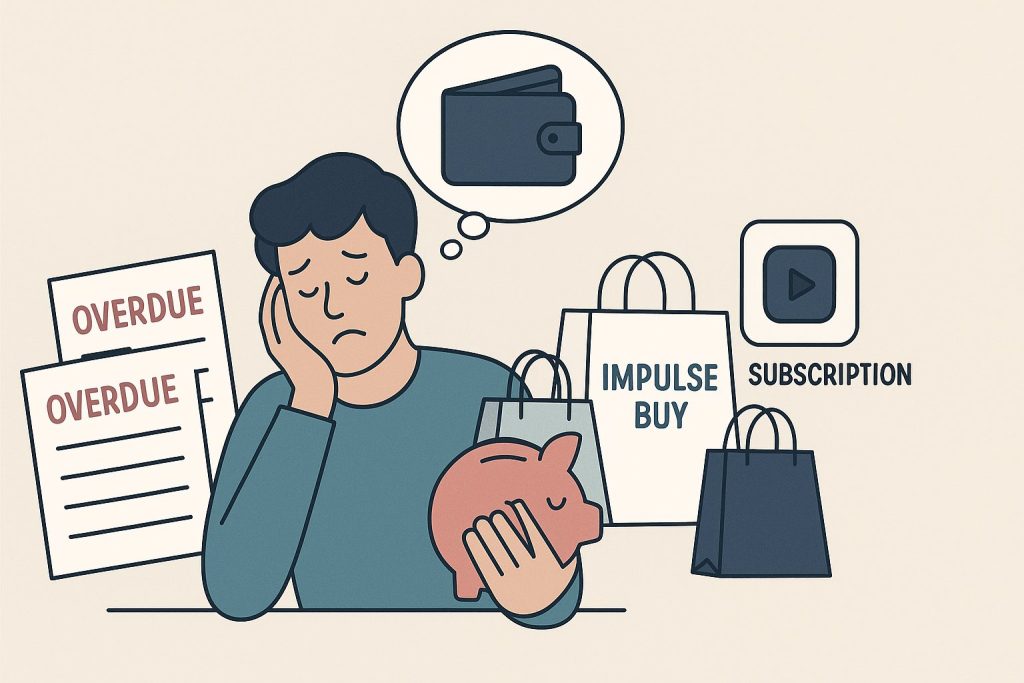
Before diving into how to create a budget, it’s important to understand why so many people give up after a few weeks:
People cut out everything fun — dining out, coffee, entertainment. Within weeks, they burn out and overspend.
✅ Fix: Allow a “fun money” category. A budget should feel balanced, not like punishment.
Coffee runs, online subscriptions, random snacks — they seem small but add up to hundreds monthly.
✅ Fix: Track everything for at least 30 days before setting categories.
Freelancers or commission earners often give up budgeting because their income isn’t stable.
✅ Fix: Base your budget on your lowest monthly income and treat anything extra as bonus.
Manually tracking every dollar gets exhausting.
✅ Fix: Use tools like YNAB or Mint to automate tracking.
Without specific goals, your budget feels pointless.
✅ Fix: Set SMART goals (Specific, Measurable, Achievable, Relevant, Time-bound). Example: “Save $5,000 for an emergency fund in 12 months.”
💡 According to NerdWallet, the key to sticking with budgeting is making it realistic and flexible.
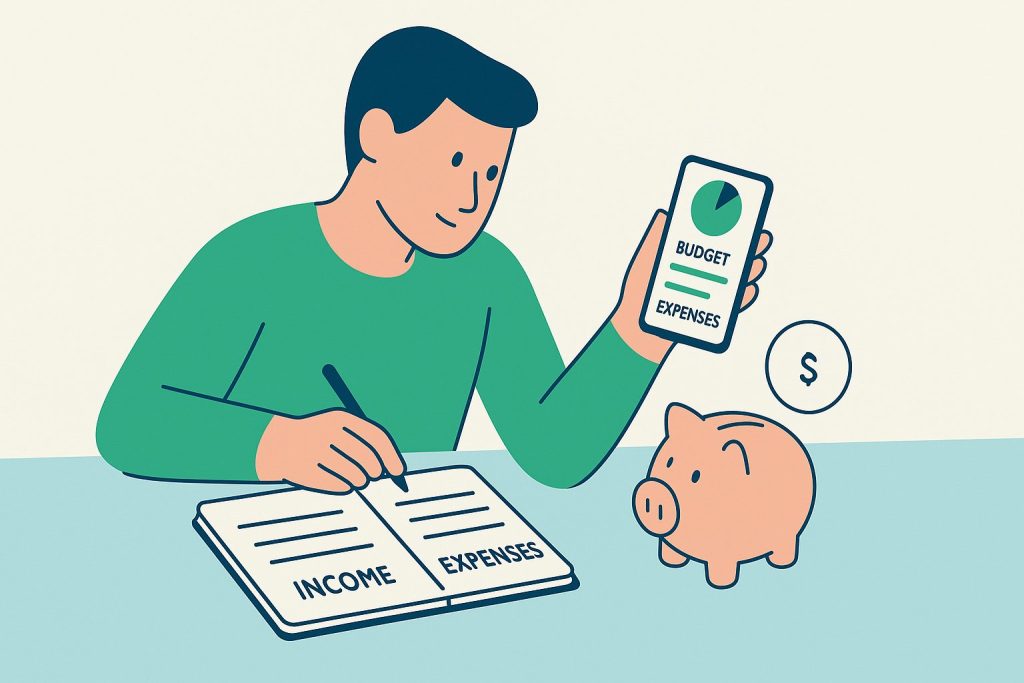
The first step in learning how to create a budget is to know where your money is coming from and where it’s going. Most people guess their spending — and those guesses are usually wrong. Tracking gives you real numbers, not assumptions.
When you track every expense for 30 days, patterns emerge. You may realize you’re spending $300/month on food delivery or $100 on forgotten subscriptions. Identifying these leaks is the foundation of knowing how to create a budget that works.
👉 According to Consumer.gov, simply writing down expenses can help you cut 10–20% of overspending without changing income.
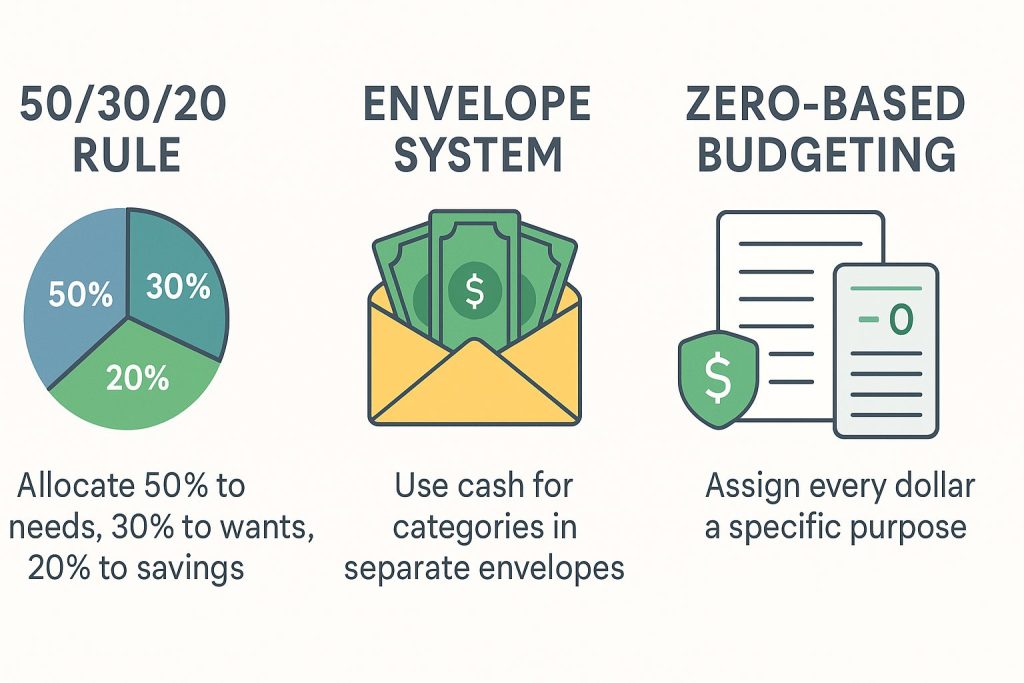
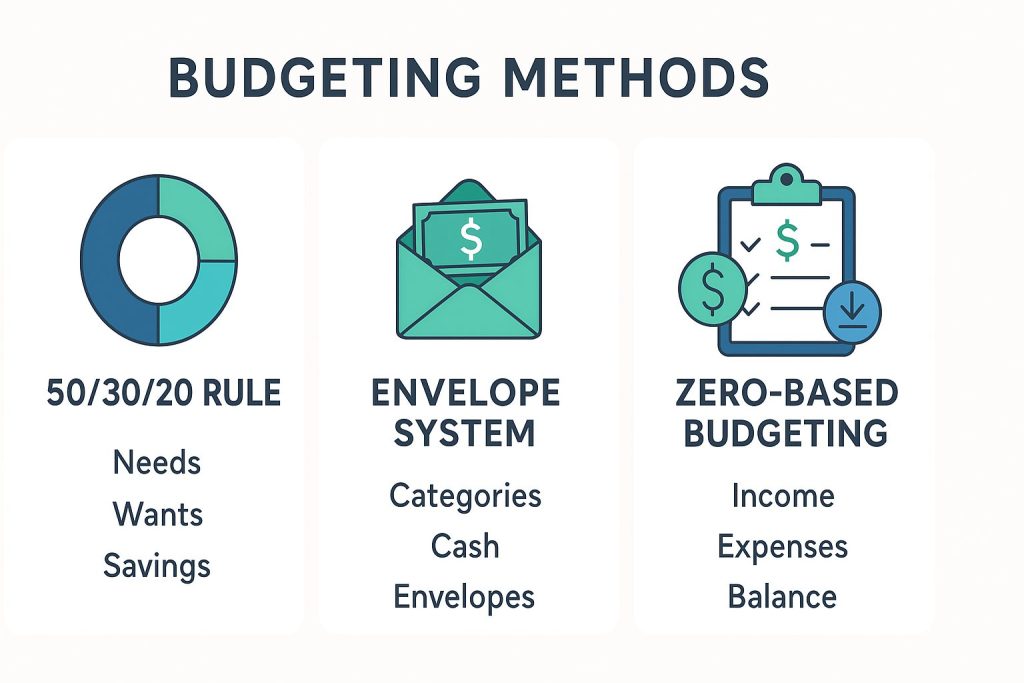
Once you know your numbers, the next step in how to create a budget is to pick a budgeting method. Not every system works for everyone. The key is to find one you’ll stick with.
1. The 50/30/20 Rule
2. Zero-Based Budgeting
3. Envelope Method
4. Digital Budgeting Apps
💡 According to Investopedia, the best budget is not the most complicated — it’s the one you can maintain for years.
A budget is useless without goals. To truly understand how to create a budget, you need to connect it to something meaningful.
SMART = Specific, Measurable, Achievable, Relevant, Time-bound.
Without goals, a budget feels restrictive. With goals, every dollar has purpose. That’s how you make budgeting motivating instead of stressful.
👉 According to Bankrate, automating goal-based savings in a high-yield account can grow your money faster and make sticking to a budget easier.
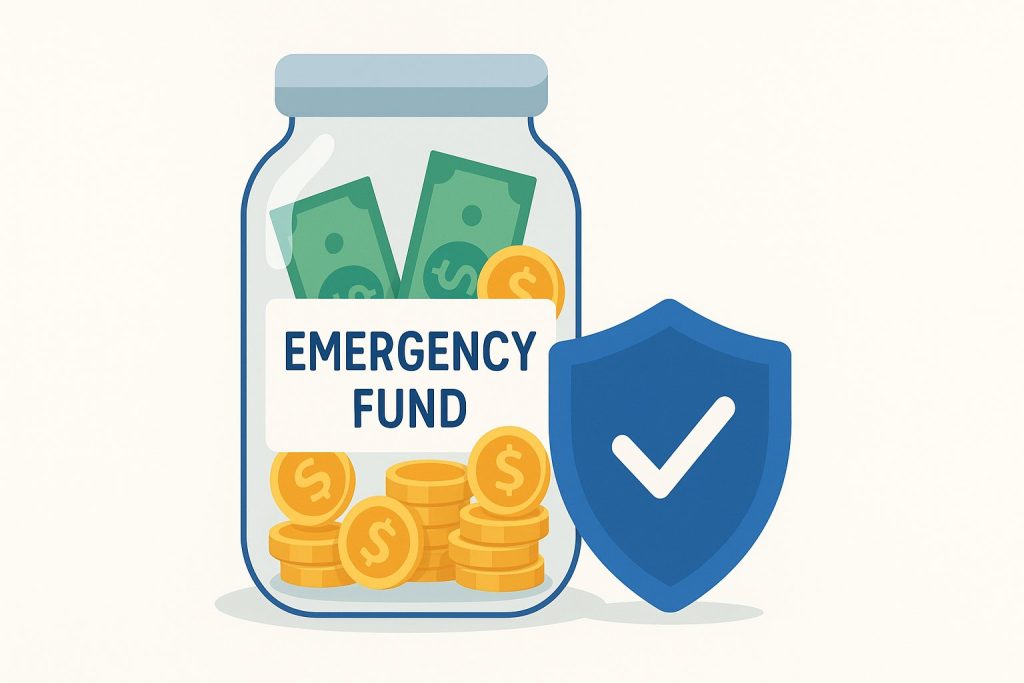
When learning how to create a budget, one of the most important steps is prioritizing your emergency fund. An emergency fund is a safety net — it keeps you from relying on credit cards or loans when unexpected expenses hit.
Without an emergency fund, even a small expense can derail your entire budget. According to a 2023 CNBC survey, 57% of Americans can’t afford a $1,000 emergency. Learning how to create a budget that includes an emergency fund prevents you from joining that statistic.

Budgets fail when they feel like punishment. One secret of how to create a budget that actually works is finding painless ways to reduce expenses.
👉 That’s $3,600/year in savings without major lifestyle sacrifices.
The best ways to save money ( 25 Practical Ways to Save Money Every Month) align with your lifestyle. A budget isn’t about deprivation — it’s about smarter choices.
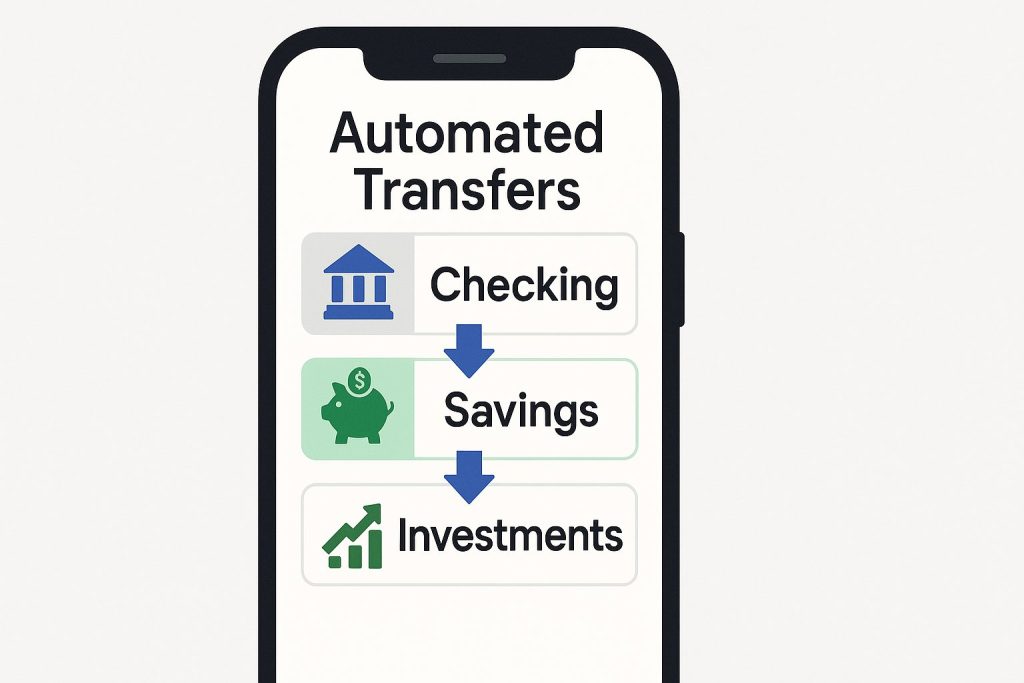
If you want to know how to create a budget that sticks, automation is the answer. Humans are inconsistent, but automation is not.
When savings and bills happen automatically, you remove willpower from the equation. This is one of the most practical steps in how to create a budget that works long-term.
💡 Pro Tip: Many banks allow you to create “sub-accounts” (like digital envelopes). You can label them Rent, Groceries, Emergency Fund, and automate transfers into each.
👉 For a deeper look at automation tools, check out NerdWallet’s automation guide
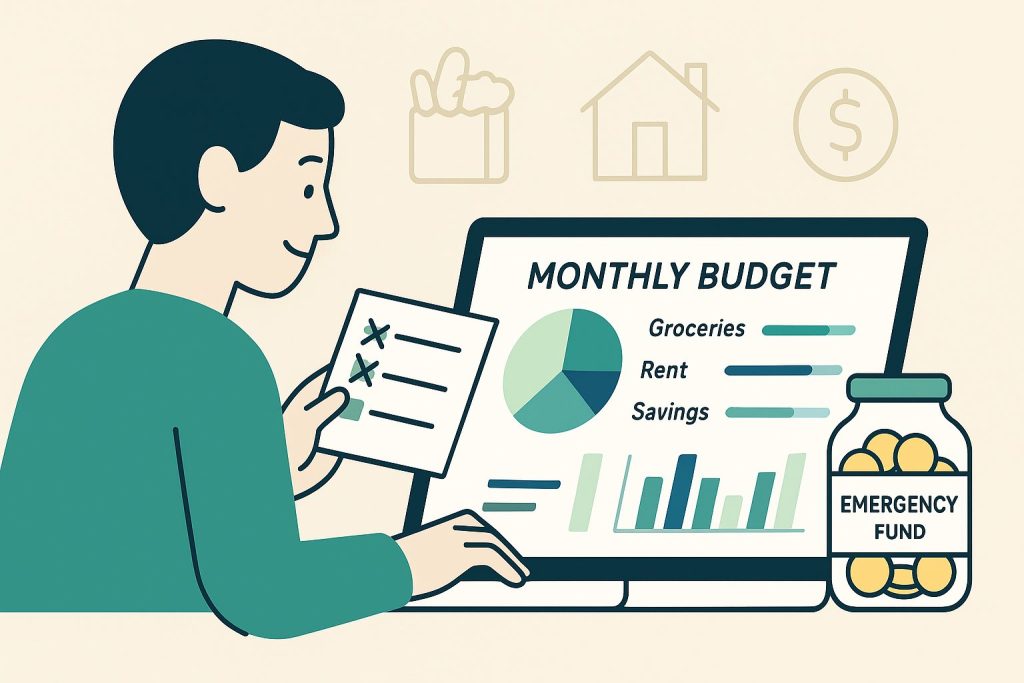
A budget isn’t a “set it and forget it” plan. If you want to know how to create a budget that works long-term, you need regular check-ins.
💡 Example: If you planned $400 for groceries but consistently spend $500, increase the grocery category by $100 and cut elsewhere. Flexibility is key to how to create a budget you can actually follow.
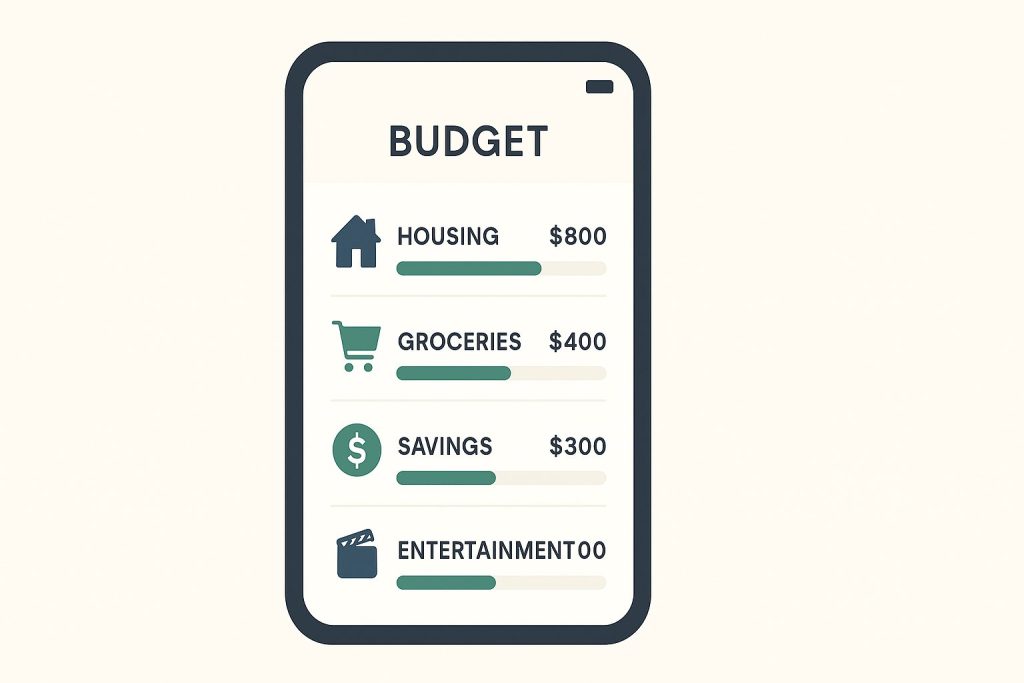
Knowing how to create a budget is easier with tools. Templates and apps provide structure, calculations, and reminders.
👉 Many financial experts (like Dave Ramsey’s team) agree that written budgets — whether on paper, spreadsheet, or app — are the most powerful money management habit.
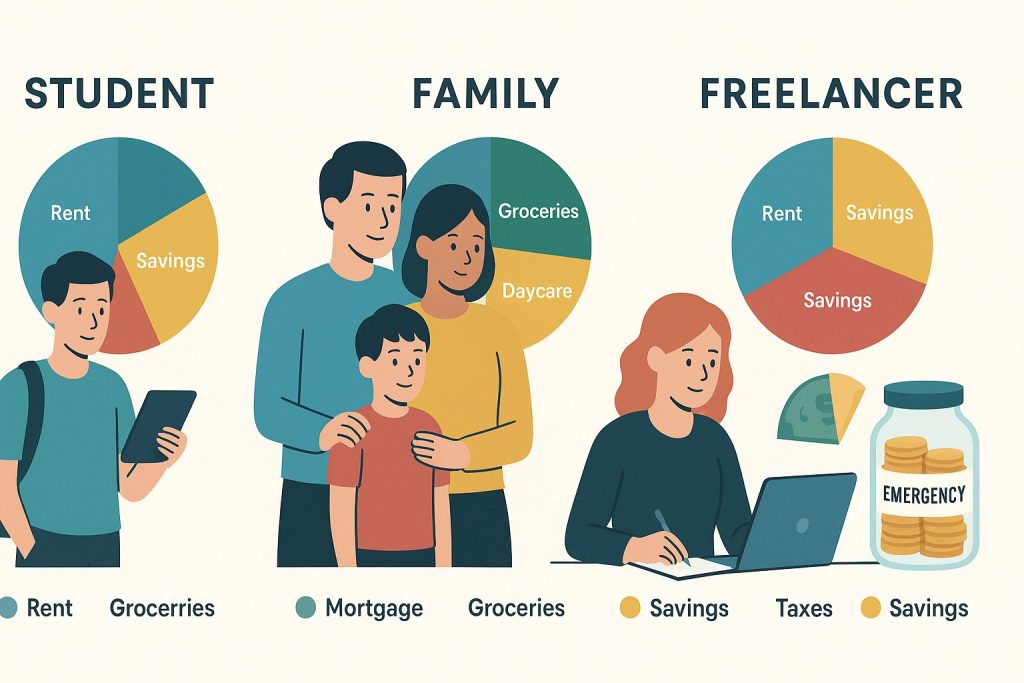
Examples make budgeting real. Let’s see how to create a budget for different life situations.
👉 Why it works: Student prioritizes rent + food but still saves $150 monthly.
👉 Why it works: Balance between essentials, debt repayment, and future savings.
👉 Why it works: Prioritizes taxes and emergency fund, key for irregular income.
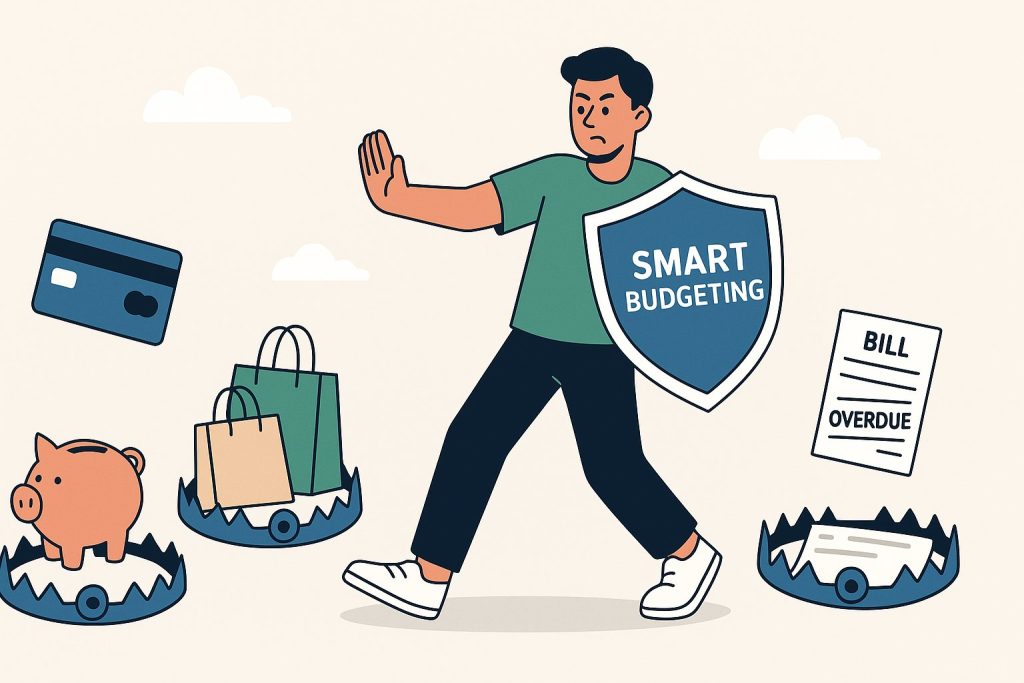
Even after learning how to create a budget, many people still make mistakes that sabotage progress. Here are the most common — and how to avoid them:
Cutting all “fun” categories leads to burnout.
✅ Fix: Allow 5–10% of income for guilt-free spending.
Car repairs, holidays, gifts — these add up and blow budgets.
✅ Fix: Create a “sinking fund” and set aside small amounts monthly.
One overspending month doesn’t mean failure.
✅ Fix: Treat budgeting like fitness — progress, not perfection.
Coffee, snacks, apps — death by a thousand cuts.
✅ Fix: Track every dollar for at least 30 days to reveal hidden leaks.
Budgets should grow with you. What worked at age 20 won’t fit at 35.
✅ Fix: Review your goals and budget every 6–12 months.
1. What’s the easiest way to create a budget for beginners?
Start with the 50/30/20 rule. It’s simple and ensures balance between needs, wants, and savings.
2. How can I create a budget with irregular income?
Base your budget on your lowest expected income month. Treat anything extra as bonus.
3. How much should I save when creating a budget?
Aim for 20% of your income, but even 5–10% is a great start. Consistency matters more than size.
4. What’s the best tool to create a budget?
Apps like YNAB, spreadsheets (like our free template), or even pen and paper.
5. How often should I review my budget?
At least once per month. Regular check-ins make your budget realistic.
6. Should I pay off debt before saving money?
Do both. Start with a $1,000 emergency fund, then use extra to pay high-interest debt.
7. Can I create a budget without cutting out fun?
Yes! The secret to how to create a budget that works is balance. Build “fun money” into your plan.
8. What’s the #1 mistake beginners make?
Not tracking actual expenses. You can’t manage what you don’t measure.
9. What categories should every budget include?
Housing, food, transportation, insurance, debt payments, savings, and fun money.
10. Where can I learn more about budgeting?
Check out Investopedia’s budgeting guide for more advanced strategies.

Now you know how to create a budget that actually works in 2025:
The key takeaway? A budget is not about restriction. It’s about control, clarity, and freedom. When you master how to create a budget, you give yourself the power to direct your money instead of wondering where it went.
👉 Ready to take the next step? Combine this budgeting system with our guide: 25 Practical Ways to Save Money Every Month. Together, they’ll help you save more, reduce stress, and build lasting financial freedom.
Why Credit Scores Matter More Than Ever in 2025 Your credit score is one of the most powerful numbers in your financial life. It determines

Debt has become one of the biggest financial struggles for Americans. Credit cards, student loans, and personal loans can easily spiral out of control when
Why an Emergency Fund Is More Important Than Ever in 2025 If 2020 taught us anything, it’s that life is unpredictable. Job losses, medical bills,

Why start investing in 2025 (and what it really means) If you’re searching for investing for beginners advice, here’s the simplest truth: investing is how

Why Learning How to Create a Budget in 2025 Matters If you’ve been wondering how to create a budget, you’re not alone. In 2025, the

Why Finding Ways to Save Money in 2025 Matters If you’ve been searching for ways to save money, you’re not alone. In 2025, higher living